
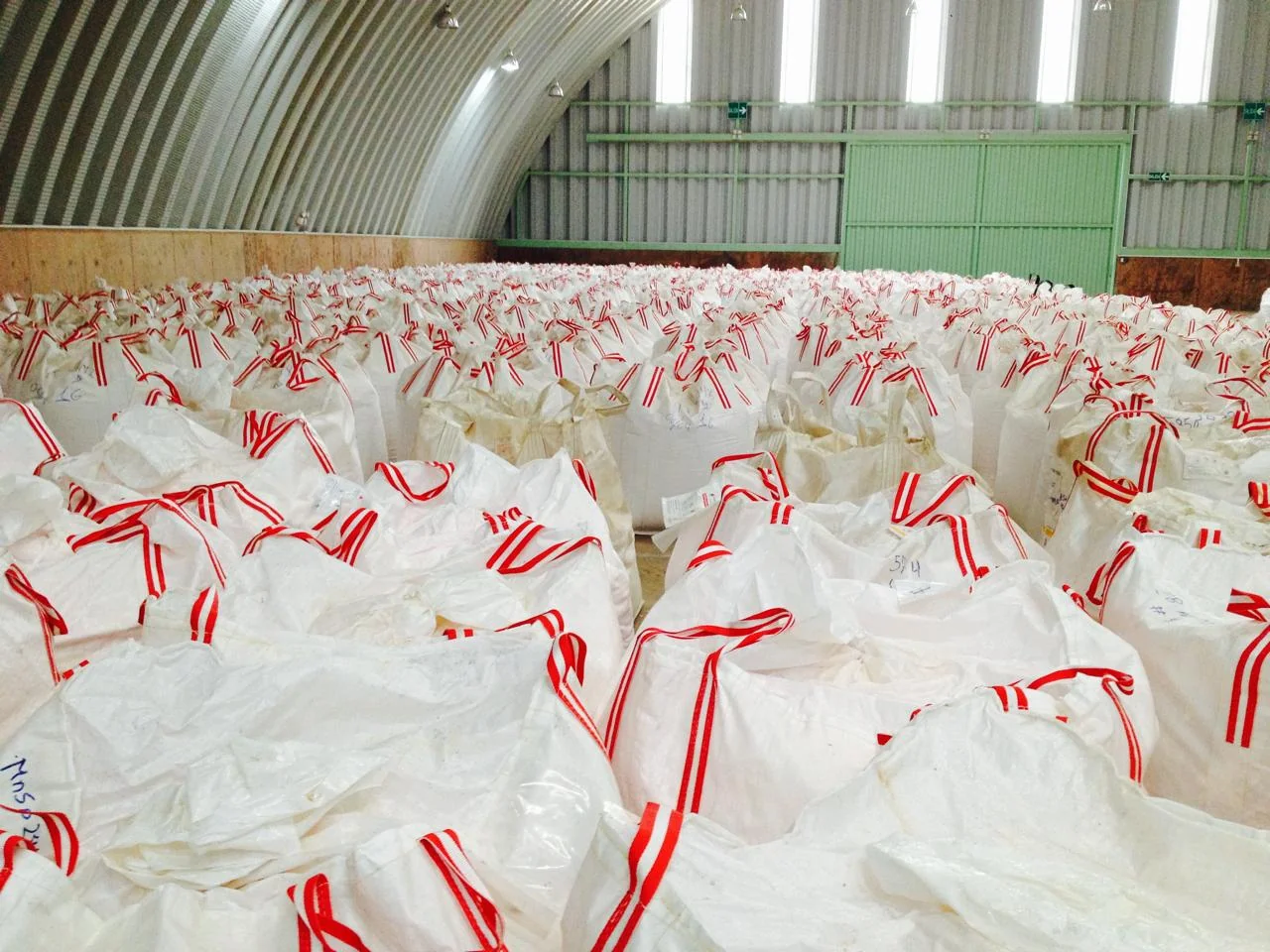
A Big Bag, also called an FIBC, bulk bag or jumbo bag, is a flexible woven polypropylene container that carries between 500 and 2,000 kg of bulk product. It replaces dozens of small sacks: 40 bags of 25 kg equal one 1,000 kg Big Bag, with less labor, less product loss and faster loading.
Big Bag types, in three decisions
- How it is filled and discharged:duffle top, open top or filling spout on top; flat bottom or discharge spout below.
- What protection the product needs:a liner against moisture, food grade or Type B antistatic.
- Which construction suits the load:4-loop, U-panel, tubular fabric or baffle (Q-bag).
You can build your combination in ourBig Bag configurator.
How to calculate the size
The size depends on the weight you want per Big Bag and the product’s density: a 1,000 kg Big Bag of cement is much smaller than one filled with a light granulate. The basic formula is: usable volume = kilos per Big Bag ÷ bulk density of the product. Then add your plant’s constraints: the height of the filling point, the pallet width and the space in the truck or container.
Six rules for safe handling
- Check fabric, loops and seams before filling.
- Do not exceed the rated load (SWL) and fill evenly.
- Always lift using all the loops.
- Never stand under a suspended Big Bag.
- Store on level ground, protected from the sun for long periods.
- Discharge with the Big Bag suspended over the hopper, keeping hands clear underneath.
See the complete guide tosafe handlingand theFIBC glossary.
Need help choosing?Tell us what you will pack and we will recommend the right Big Bag.Get a quote within 24 hoursor message us onWhatsApp +51 979 352 351.